
AidboxTopicSubscription AWS EventBridge tutorial
This functionality is available starting from Aidbox version 2601.
Aidbox version compatibility
| Aidbox | Connector JAR | Profile URL |
|---|---|---|
| ≥ 2604 | topic-destination-aws-eventbridge-2604.0.jar | http://health-samurai.io/fhir/core/StructureDefinition/aidboxtopicdestination-awsEventBridgeBestEffortProfilehttp://health-samurai.io/fhir/core/StructureDefinition/aidboxtopicdestination-awsEventBridgeAtLeastOnceProfile |
| < 2604 | topic-destination-aws-eventbridge-2601.1.jar | http://aidbox.app/StructureDefinition/aidboxtopicdestination-aws-eventbridge-best-efforthttp://aidbox.app/StructureDefinition/aidboxtopicdestination-aws-eventbridge-at-least-once |
Examples below use the ≥ 2604 form. On older Aidbox, swap both the JAR and the meta.profile URL. Redeploy the JAR when crossing the 2604 boundary — older JARs register profiles via a legacy path the new validator no longer honors.
Objectives
- Learn how to integrate AidboxTopicSubscriptions with AWS EventBridge
Before you begin
- Make sure your Aidbox version is 2601 or newer
- Setup the local Aidbox instance using getting started guide
What is AWS EventBridge?
AWS EventBridge is a serverless event bus service that enables you to build event-driven applications. It provides a central hub for receiving, filtering, transforming, and routing events from various sources to AWS services or custom applications.
For detailed information, see the official EventBridge documentation.
Key Concepts
Event Bus is a router that receives events and delivers them to targets based on rules. EventBridge provides:
- Default event bus: Receives events from AWS services
- Custom event buses: For your application events
- Partner event buses: For SaaS integrations
Events are JSON objects with standard fields:
source: Identifies the event producer (for example,aidbox.mycompany.com)detail-type: Categorizes events for filtering (for example,FHIR Patient Notification)detail: The actual payload (FHIR Bundle with subscription notification)
Best Effort vs At-Least-Once Delivery
In Aidbox, two AidboxTopicDestination profiles are supported:
http://health-samurai.io/fhir/core/StructureDefinition/aidboxtopicdestination-awsEventBridgeBestEffortProfile— Events are sent immediately. If EventBridge returns an error, the event is lost. Low latency, suitable for non-critical notifications.http://health-samurai.io/fhir/core/StructureDefinition/aidboxtopicdestination-awsEventBridgeAtLeastOnceProfile— Events are persisted to database before sending. If EventBridge is unavailable, events remain in queue and are retried automatically. Supports batching up to 10 events. Guaranteed delivery for critical integrations.
Setting up locally
Follow the steps to try AWS EventBridge AidboxTopicSubscription with LocalStack — a local AWS emulator for development and testing.
1. Create directory structure
mkdir eventbridge && cd eventbridge
2. Configure docker-compose.yaml
Download the getting started docker-compose.yaml and add LocalStack service for local testing:
services:
  localstack:
    image: localstack/localstack:latest
    ports:
      - "4566:4566"
    environment:
      - SERVICES=events
      - DEBUG=1

  aidbox:
    # ... existing aidbox configuration ...
    extra_hosts:
      - "host.docker.internal:host-gateway"
    volumes:
      - ./topic-destination-aws-eventbridge-2601.1.jar:/topic-destination-aws-eventbridge.jar
    environment:
      BOX_MODULE_LOAD: io.healthsamurai.topic-destination.eventbridge.core
      BOX_MODULE_JAR: "/topic-destination-aws-eventbridge.jar"
      # ... other envs ...
3. Download the EventBridge module
Download .jar EventBridge module file from our bucket and place it next to docker-compose.yaml.
curl -O https://storage.googleapis.com/aidbox-modules/topic-destination-aws-eventbridge/topic-destination-aws-eventbridge-2601.1.jar
4. Start services
docker compose up -d
5. Verify installation
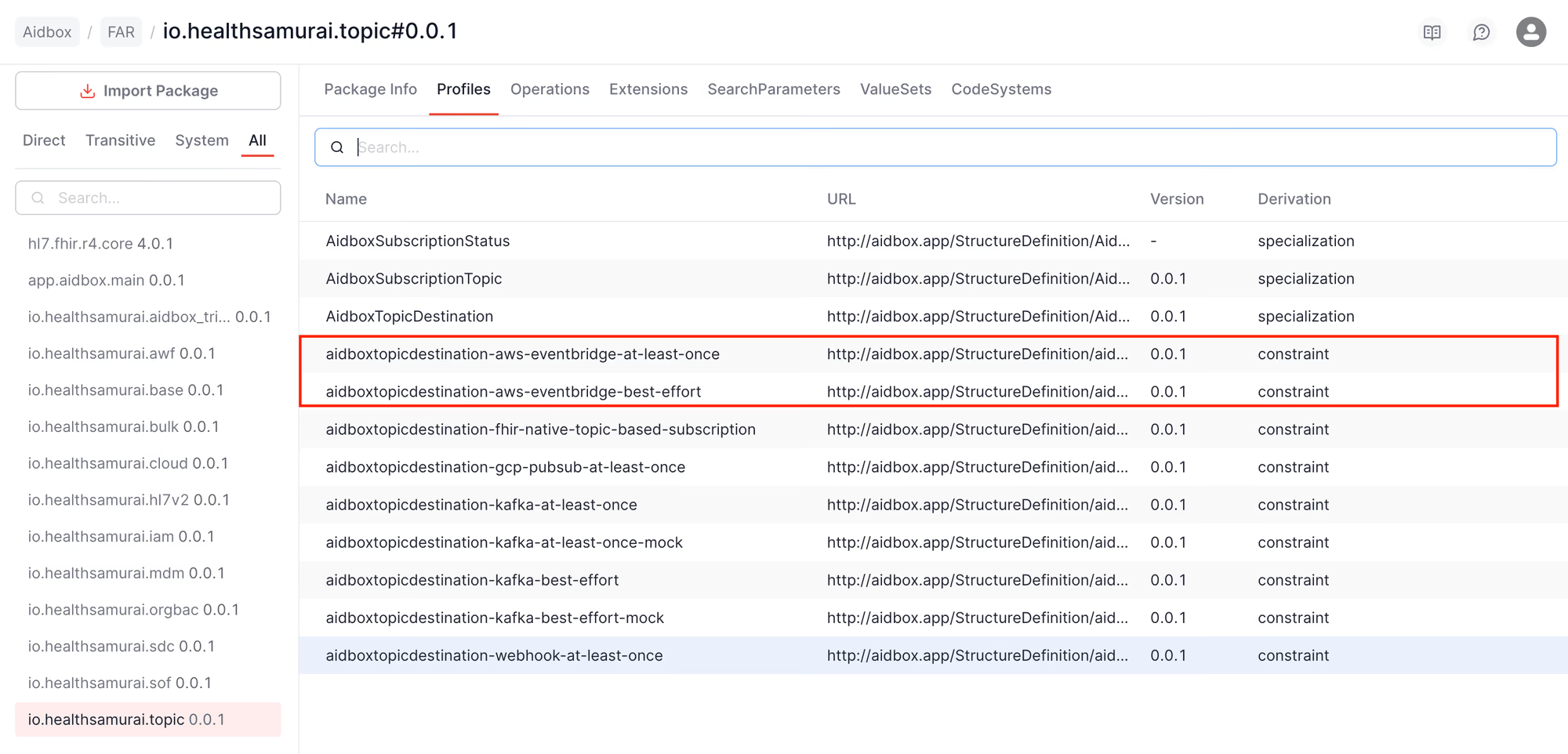
In AidboxUI, go to FHIR Packages -> io.healthsamurai.topic and make sure that EventBridge profiles are present:
aidboxtopicdestination-aws-eventbridge-best-effortaidboxtopicdestination-aws-eventbridge-at-least-once
6. Create Event Bus in LocalStack
aws --endpoint-url=http://localhost:4566 events create-event-bus --name test-bus
To verify:
aws --endpoint-url=http://localhost:4566 events list-event-buses
Basic Usage (Best Effort)
1. Create a subscription topic
POST /fhir/AidboxSubscriptionTopic
content-type: application/json
accept: application/json

{
  "resourceType": "AidboxSubscriptionTopic",
  "url": "patient-topic",
  "status": "active",
  "trigger": [
    {
      "resource": "Patient",
      "fhirPathCriteria": "name.exists()"
    }
  ]
}
2. Create AidboxTopicDestination
POST /fhir/AidboxTopicDestination
content-type: application/json
accept: application/json

{
  "id": "eventbridge-destination",
  "resourceType": "AidboxTopicDestination",
  "meta": {
    "profile": [
      "http://health-samurai.io/fhir/core/StructureDefinition/aidboxtopicdestination-awsEventBridgeBestEffortProfile"
    ]
  },
  "kind": "aws-eventbridge-best-effort",
  "topic": "patient-topic",
  "parameter": [
    {
      "name": "eventBusName",
      "valueString": "test-bus"
    },
    {
      "name": "region",
      "valueString": "us-east-1"
    },
    {
      "name": "source",
      "valueString": "aidbox.mycompany.com"
    },
    {
      "name": "detailType",
      "valueString": "FHIR Patient Notification"
    },
    {
      "name": "accessKeyId",
      "valueString": "test"
    },
    {
      "name": "secretAccessKey",
      "valueString": "test"
    },
    {
      "name": "endpointOverride",
      "valueString": "http://host.docker.internal:4566"
    }
  ]
}
3. Create a Patient
POST /fhir/Patient
content-type: application/json

{
  "name": [{"family": "Smith", "given": ["John"]}]
}
4. Verify event delivery
Check the topic destination status:
GET /fhir/AidboxTopicDestination/eventbridge-destination/$status
Response:
{
  "resourceType": "Parameters",
  "parameter": [
    { "name": "messagesDelivered", "valueDecimal": 1 },
    { "name": "messagesDeliveryAttempts", "valueDecimal": 0 },
    { "name": "messagesInProcess", "valueDecimal": 0 },
    { "name": "messagesQueued", "valueDecimal": 0 },
    { "name": "startTimestamp", "valueDateTime": "2025-05-05T10:00:00Z" },
    { "name": "status", "valueString": "active" }
  ]
}
View events in LocalStack
To verify events are actually delivered to EventBridge, create an SQS queue as a target:
aws --endpoint-url=http://localhost:4566 events put-rule \
  --name "log-all" \
  --event-bus-name "test-bus" \
  --event-pattern '{"source": [{"prefix": ""}]}'
aws --endpoint-url=http://localhost:4566 sqs create-queue --queue-name test-queue
aws --endpoint-url=http://localhost:4566 events put-targets \
  --rule "log-all" \
  --event-bus-name "test-bus" \
  --targets "Id"="1","Arn"="arn:aws:sqs:us-east-1:000000000000:test-queue"
aws --endpoint-url=http://localhost:4566 sqs receive-message \
  --queue-url http://localhost:4566/000000000000/test-queue
At-Least-Once with Batching
For guaranteed delivery with batch processing, use the at-least-once profile:
POST /fhir/AidboxTopicDestination
content-type: application/json
accept: application/json

{
  "id": "eventbridge-reliable",
  "resourceType": "AidboxTopicDestination",
  "meta": {
    "profile": [
      "http://health-samurai.io/fhir/core/StructureDefinition/aidboxtopicdestination-awsEventBridgeAtLeastOnceProfile"
    ]
  },
  "kind": "aws-eventbridge-at-least-once",
  "topic": "patient-topic",
  "parameter": [
    {
      "name": "eventBusName",
      "valueString": "test-bus"
    },
    {
      "name": "region",
      "valueString": "us-east-1"
    },
    {
      "name": "source",
      "valueString": "aidbox.mycompany.com"
    },
    {
      "name": "detailType",
      "valueString": "FHIR Patient Notification"
    },
    {
      "name": "accessKeyId",
      "valueString": "test"
    },
    {
      "name": "secretAccessKey",
      "valueString": "test"
    },
    {
      "name": "endpointOverride",
      "valueString": "http://host.docker.internal:4566"
    },
    {
      "name": "batchSize",
      "valueInteger": 10
    }
  ]
}
The batchSize parameter (1-10) controls how many events are sent in a single PutEvents API call. EventBridge allows maximum 10 entries per request.
Configuration Reference
Available Parameters
| Parameter | Type | Required | Description |
|---|---|---|---|
eventBusName | valueString | Yes | Event Bus name or ARN (default, my-bus, or full ARN) |
region | valueString | Yes | AWS region (us-east-1, eu-west-1, etc.) |
source | valueString | Yes | Event source identifier for routing rules |
detailType | valueString | Yes | Event type for filtering in EventBridge rules |
accessKeyId | valueString | No | AWS Access Key ID (uses default credential chain if not provided) |
secretAccessKey | valueString | No | AWS Secret Access Key |
endpointOverride | valueString | No | Override endpoint URL (for LocalStack: http://localhost:4566) |
batchSize | valueInteger | No | Events per batch, 1-10 (at-least-once only, default: 1) |
Event Format
Events sent to EventBridge have this structure:
{
  "source": "aidbox.mycompany.com",
  "detail-type": "FHIR Patient Notification",
  "detail": {
    "topic": "patient-topic",
    "value": {
      "resourceType": "Bundle",
      "type": "history",
      "timestamp": "2025-05-05T10:00:00Z",
      "entry": [
        {
          "resource": {
            "resourceType": "AidboxSubscriptionStatus",
            "status": "active",
            "type": "event-notification",
            "notificationEvent": [
              {
                "eventNumber": 1,
                "focus": { "reference": "Patient/123" }
              }
            ],
            "topic": "patient-topic",
            "topic-destination": {
              "reference": "AidboxTopicDestination/eventbridge-destination"
            }
          }
        },
        {
          "request": { "method": "POST", "url": "/fhir/Patient" },
          "fullUrl": "http://localhost:8080/fhir/Patient/123",
          "resource": {
            "resourceType": "Patient",
            "id": "123",
            "name": [{ "family": "Smith", "given": ["John"] }]
          }
        }
      ]
    }
  },
  "event-bus-name": "test-bus"
}
AWS Authentication
Option 1: Access Keys (for development)
Provide accessKeyId and secretAccessKey parameters directly in the AidboxTopicDestination.
Option 2: IAM Role (recommended for production)
When running on AWS (EC2, ECS, EKS), omit accessKeyId and secretAccessKey. The module will use the default AWS credential chain:
- Environment variables (
AWS_ACCESS_KEY_ID,AWS_SECRET_ACCESS_KEY) - Web Identity Token (for EKS)
- EC2/ECS Instance Profile
Required IAM permissions:
{
  "Version": "2012-10-17",
  "Statement": [
    {
      "Effect": "Allow",
      "Action": "events:PutEvents",
      "Resource": "arn:aws:events:*:*:event-bus/your-bus-name"
    }
  ]
}
Creating EventBridge Rules
EventBridge Rules define how events are routed to targets. To route events from EventBridge to targets, create rules in the AWS Console or via CLI:
aws events put-rule \
  --name "patient-notifications" \
  --event-bus-name "test-bus" \
  --event-pattern '{
    "source": ["aidbox.mycompany.com"],
    "detail-type": ["FHIR Patient Notification"]
  }'
aws events put-targets \
  --rule "patient-notifications" \
  --event-bus-name "test-bus" \
  --targets "Id"="1","Arn"="arn:aws:sqs:us-east-1:123456789:patient-queue"
Monitoring
Status Endpoint
GET /fhir/AidboxTopicDestination/{id}/$status
Response Parameters
| Parameter | Description |
|---|---|
messagesDelivered | Total successfully delivered events |
messagesDeliveryAttempts | Failed delivery attempts |
messagesInProcess | Events currently being sent |
messagesQueued | Events waiting in queue (at-least-once only) |
startTimestamp | Destination start time |
status | Always active |
lastErrorDetail | Recent error information |
Prometheus Metrics
GET /metrics
Metrics include:
aidbox_topic_destination_messages_deliveredaidbox_topic_destination_messages_queuedaidbox_topic_destination_messages_in_process
Set up with AWS
Prerequisites
- AWS account with EventBridge access
- AWS CLI configured:
aws configure - IAM user/role with
events:PutEventspermission
Step 1: Create Event Bus
aws events create-event-bus --name aidbox-events --region us-east-1
Step 2: Create SQS Queue for Testing
Create a queue to receive events (for verification):
aws sqs create-queue --queue-name aidbox-test-queue --region us-east-1
Step 3: Create EventBridge Rule
Route events to the SQS queue:
aws events put-rule \
  --name "aidbox-to-sqs" \
  --event-bus-name "aidbox-events" \
  --event-pattern '{"source": ["aidbox.mycompany.com"]}' \
  --region us-east-1
SQS_ARN=$(aws sqs get-queue-attributes \
  --queue-url https://sqs.us-east-1.amazonaws.com/YOUR_ACCOUNT_ID/aidbox-test-queue \
  --attribute-names QueueArn \
  --query 'Attributes.QueueArn' \
  --output text \
  --region us-east-1)
aws events put-targets \
  --rule "aidbox-to-sqs" \
  --event-bus-name "aidbox-events" \
  --targets "Id"="1","Arn"="$SQS_ARN" \
  --region us-east-1
Step 4: Configure SQS Policy
Allow EventBridge to send messages to SQS:
aws sqs set-queue-attributes \
  --queue-url https://sqs.us-east-1.amazonaws.com/YOUR_ACCOUNT_ID/aidbox-test-queue \
  --attributes '{
    "Policy": "{\"Version\":\"2012-10-17\",\"Statement\":[{\"Effect\":\"Allow\",\"Principal\":{\"Service\":\"events.amazonaws.com\"},\"Action\":\"sqs:SendMessage\",\"Resource\":\"arn:aws:sqs:us-east-1:YOUR_ACCOUNT_ID:aidbox-test-queue\"}]}"
  }' \
  --region us-east-1
Step 5: Create AidboxTopicDestination
When running on AWS infrastructure (EC2, ECS, EKS), use IAM roles instead of access keys. See AWS Authentication for details.
POST /fhir/AidboxTopicDestination
content-type: application/json

{
  "id": "eventbridge-aws",
  "resourceType": "AidboxTopicDestination",
  "meta": {
    "profile": [
      "http://health-samurai.io/fhir/core/StructureDefinition/aidboxtopicdestination-awsEventBridgeAtLeastOnceProfile"
    ]
  },
  "kind": "aws-eventbridge-at-least-once",
  "topic": "patient-topic",
  "parameter": [
    {"name": "eventBusName", "valueString": "aidbox-events"},
    {"name": "region", "valueString": "us-east-1"},
    {"name": "source", "valueString": "aidbox.mycompany.com"},
    {"name": "detailType", "valueString": "FHIR Patient Notification"}
  ]
}
Step 6: Test and Verify
- Create a Patient in Aidbox
- Check SQS for received messages:
aws sqs receive-message \
  --queue-url https://sqs.us-east-1.amazonaws.com/YOUR_ACCOUNT_ID/aidbox-test-queue \
  --region us-east-1