

Migrating to Aidbox: How Deep 6 AI enhanced performance of its AI pipeline for clinical trial recruitment
Executive Summary
Deep 6 AI partnered with Health Samurai to enhance their healthcare data pipeline by implementing the Aidbox FHIR server. This migration reduced data loading times by 50% while improving data quality by 90% through validation against Deep 6's FHIR Implementation Guide.
The cloud-native solution on AWS with Kubernetes provides real-time monitoring and elastic scaling capabilities. Using Aidbox's PostgreSQL engine, automated IG processing, and standardized FHIR integration patterns, Deep 6 AI improved operational efficiency and accelerated partner onboarding. This transformation has positioned Deep 6 AI to develop a multi-client SaaS platform.
Company Background
Deep 6 AI is an innovative healthcare technology company that leverages artificial intelligence (AI) to accelerate and improve clinical trial recruitment. Their platform uses natural language processing (NLP) and machine learning (ML) to analyze structured and unstructured clinical data from electronic health records (EHRs) to match patients to appropriate clinical trials based on complex inclusion and exclusion criteria. This technology significantly reduces the time and cost associated with patient recruitment, one of the most challenging aspects of clinical trials.
Health Samurai is the company behind Aidbox, a high-performance FHIR server platform, designed to meet the demanding requirements of modern healthcare applications. Aidbox provides a comprehensive solution for healthcare data interoperability, featuring a PostgreSQL-based FHIR storage engine, advanced security capabilities, and flexible deployment options. Health Samurai's expertise in healthcare interoperability standards and cloud-native architectures made them an ideal partner for Deep 6 AI's transformation journey.
Challenge
Deep 6 AI faced several challenges with their previous FHIR implementation:
-
Performance Bottlenecks -- The initial data loading process from healthcare systems was lengthy and tedious, creating delays in onboarding new healthcare partners.
-
Limited Scalability -- As Deep 6 AI expanded to more healthcare systems and processed larger volumes of data, the previous architecture struggled to scale efficiently, leading to increased infrastructure costs and operational complexity.
-
Monitoring Deficiencies -- The legacy system provided limited visibility into the data processing pipeline, making it difficult to track progress, identify bottlenecks, and ensure data completeness.
-
FHIR IG versioning -- Frictions on loading new versions of Deep 6 AI custom FHIR IG.
Solution
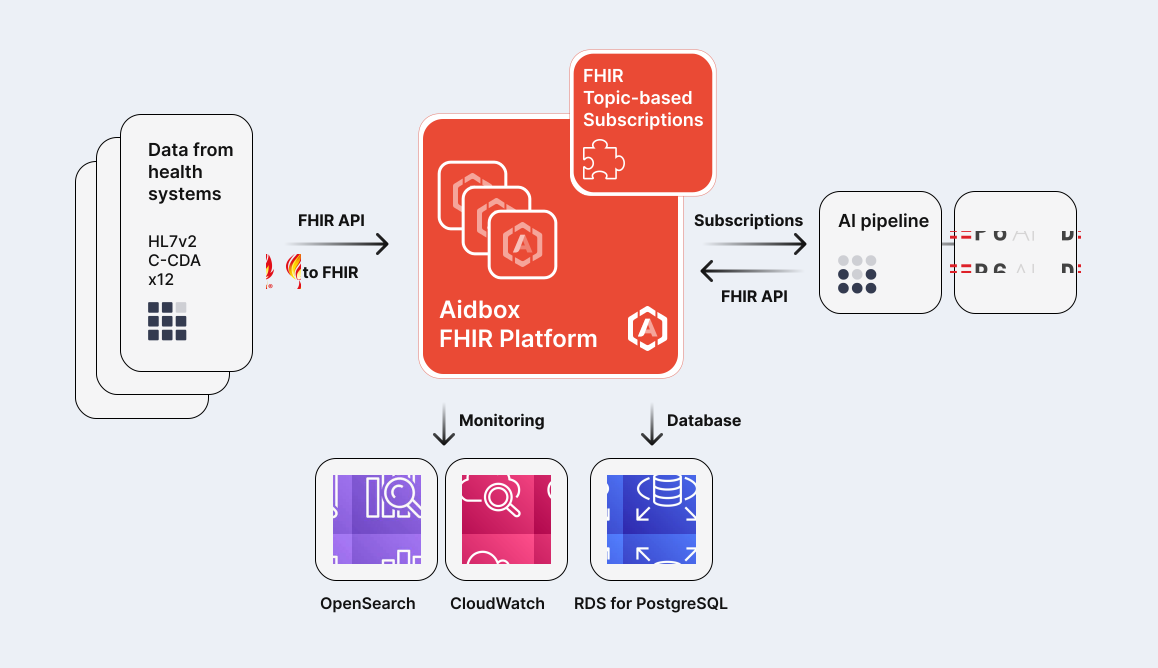
In collaboration with Health Samurai, Deep 6 AI implemented the Aidbox FHIR server. The key components of this solution included:
Aidbox FHIR server
Replacing the previous implementation with Aidbox provided immediate benefits including:
- Improved error handling which provides full visibility into continuous real-time data ingestion.
- Efficient query capabilities allow for better visibility into the entire client data set.
Deep 6 FHIR Implementation Guide
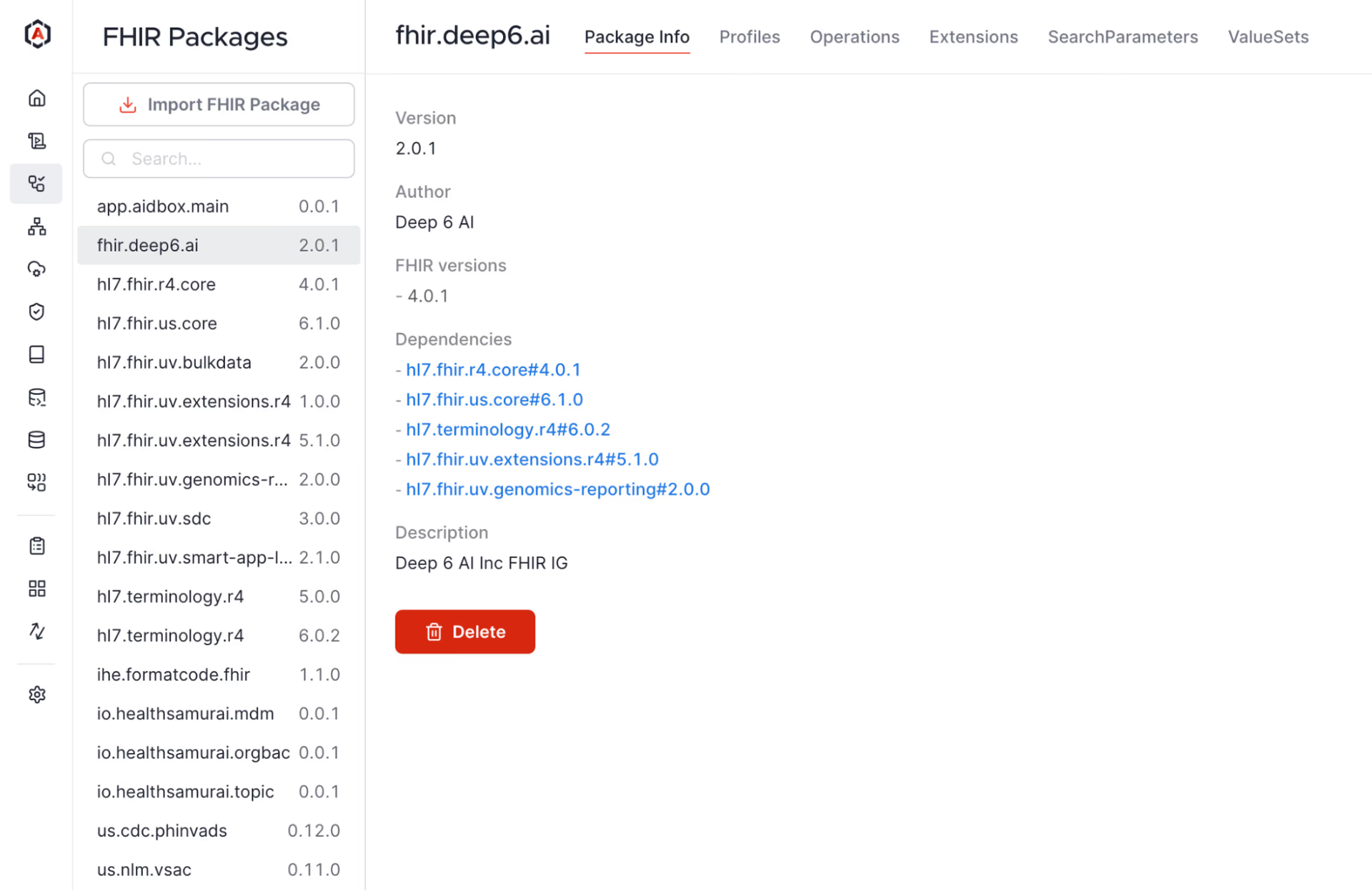
Aidbox offers a fully-automated process for loading FHIR IGs with all their dependencies and a SaaS Terminology Server, making it easy to configure the FHIR server for the set of IGs a customer needs.
Deep 6 AI has developed their own FHIR IG that allows for standardized data validation, ensuring that all incoming data meets Deep 6 AI's specific requirements for AI processing and clinical trial matching. The process of IG version upgrade is no longer a bottleneck in the overall operations since the new version is loaded in a couple of clicks after being published to the Simplifier package store.
Kubernetes Cluster Deployment
The solution was deployed on a highly available Amazon EKS cluster, ensuring resilience, scalability, and efficient resource utilization. AWS RDS for PostgreSQL provided a managed database solution with seamless performance and scalability on demand.
This architecture allowed Deep 6 AI to dynamically scale Aidbox instances during initial data loading for maximum throughput and then downscale resources afterward to optimize costs.
Real-time Monitoring Dashboard and transaction log
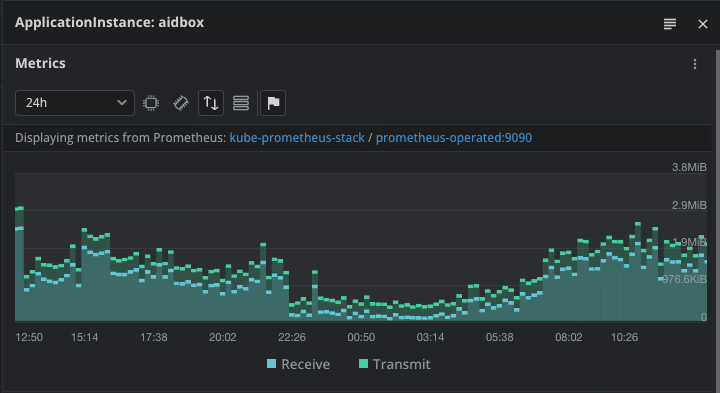
Aidbox comes with monitoring dashboards based on Prometheus and Grafana, and a transaction log based on Elasticsearch. The integration of these comprehensive monitoring and alerting capabilities provided visibility into the data loading process, with real-time metrics on progress, errors, and data quality. The complete transaction log enabled Deep 6 AI to investigate any problems with the data.
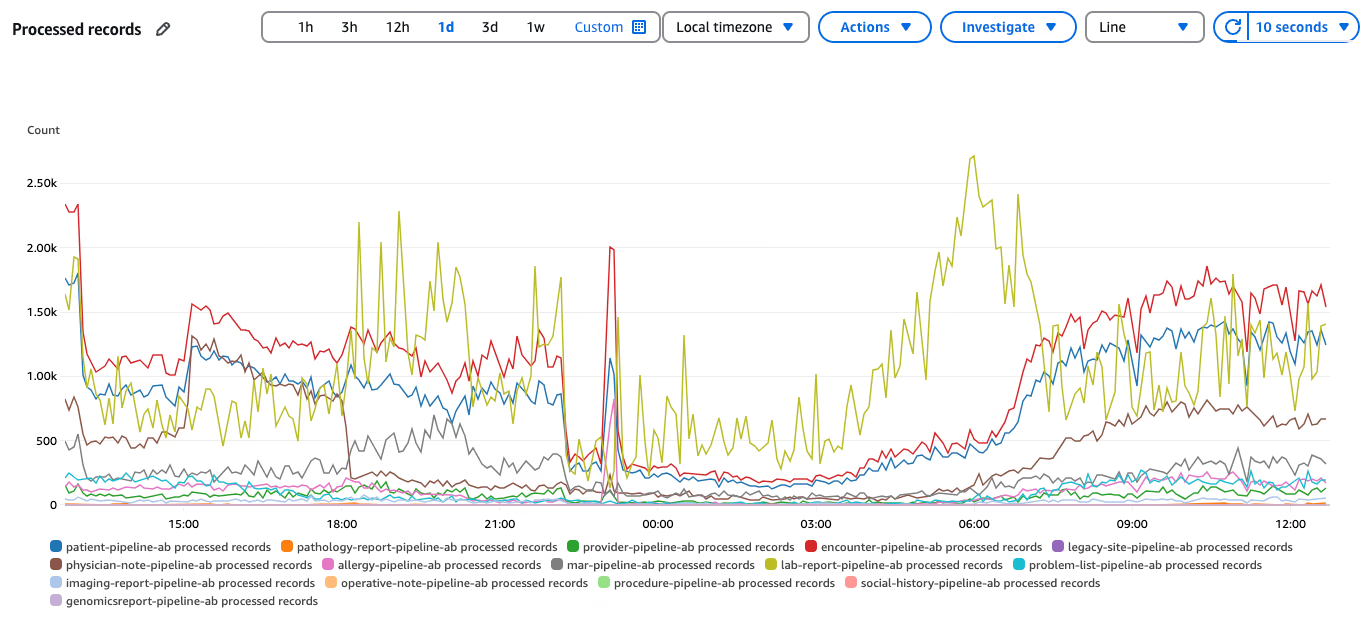
Standardized Integration Patterns with FHIR API, bulk FHIR API, and FHIR subscriptions
Implementation of consistent integration approaches for connecting to healthcare systems included support for direct FHIR APIs and bulk data transfer mechanisms. After data was validated in Aidbox, it was passed to the downstream Deep 6 AI solution through FHIR topic-based subscriptions.
Results
Configuration
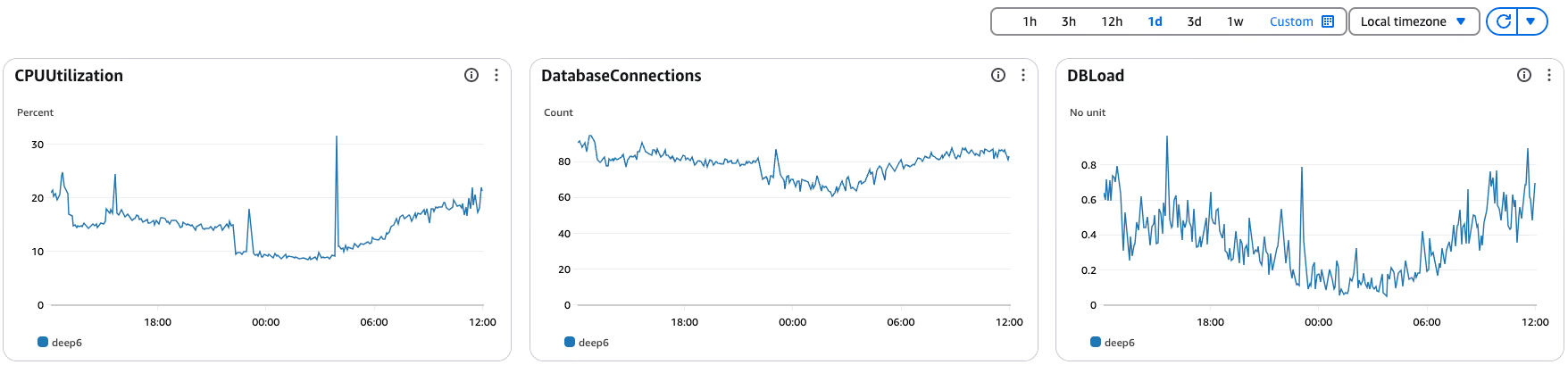
Database
For the initial data load Deep 6 AI deployed Aidbox to AWS RDS Postgres m7g.2xlarge [8 vCPU 32 GiB].
Aidbox
48 Aidbox instances were deployed to AWS EKS Nodes 3 x m7g.2xlarge [8 vCPU 32 GiB]. This allowed to post an average of 2,400 FHIR resources per second with synchronous validation. This resulted in a 6-day load time for a total of 1.2B FHIR resources.
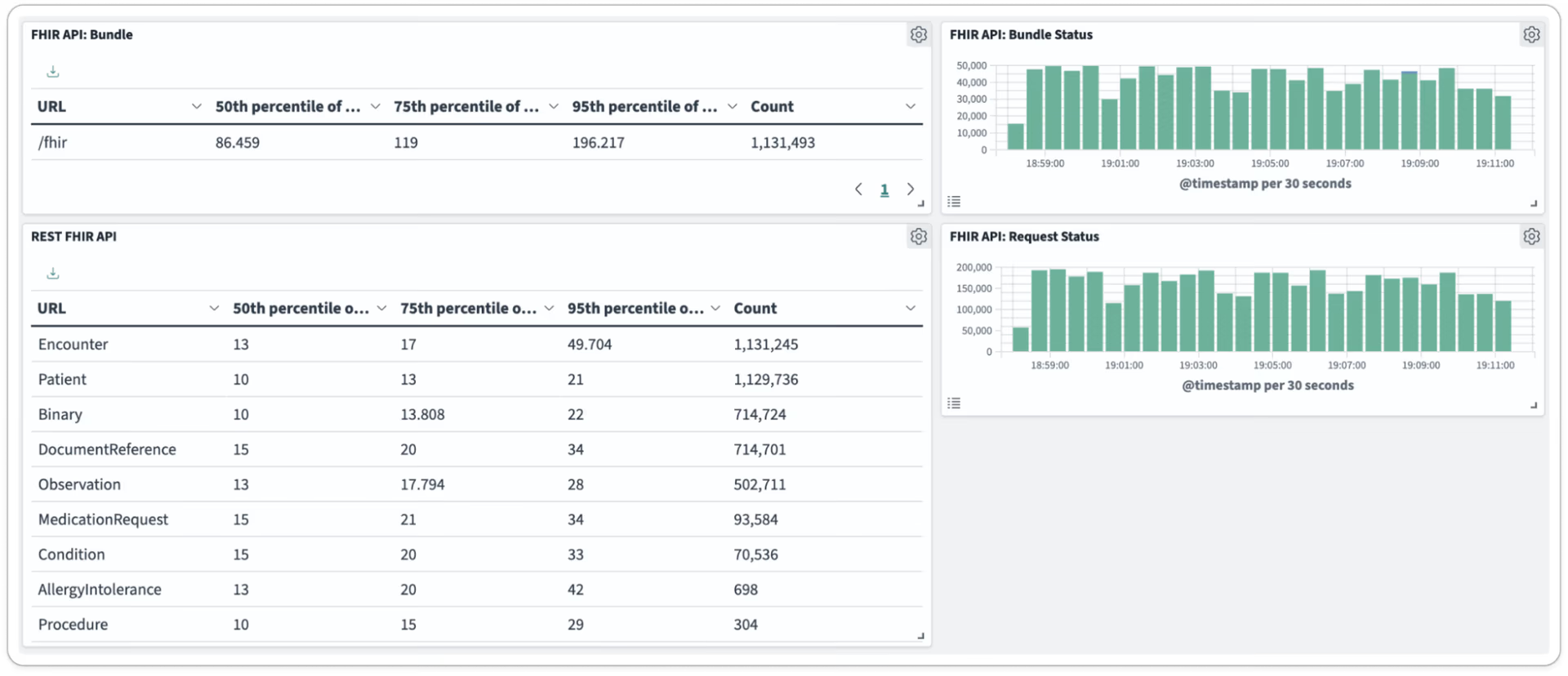
The implementation of Aidbox delivered transformative results for Deep 6 AI:
Key Achievements
-
Dramatic Performance Improvements -- Initial data loading time reduced by 50%.
-
Enhanced Data Quality -- 90% reduction in data validation errors with synchronous validation of each resource against the custom Deep 6 AI IG.
-
Operational Efficiency -- Real-time visibility into data processing status and errors.
-
Scalability Achievements -- Dynamic scaling of the Kubernetes cluster during peak periods.
Deep 6 AI has successfully implemented their platform with Aidbox for three priority customers with the highest requirements for data volumes and throughput. The biggest historical data set loaded to a single Aidbox instance in the course of the implementation was over one billion FHIR resources (which is over 1TB of data).
The success of the new Deep 6 FHIR data ingestion pipeline enables Deep 6 to develop a SaaS platform that can serve many clients.
Conclusion
The partnership between Deep 6 AI and Health Samurai demonstrates the significant impact that high-performance FHIR server technology can have on healthcare data processing pipelines. By replacing their legacy FHIR server implementation with Aidbox, Deep 6 AI achieved transformative improvements in performance, data quality, and operational efficiency.
For healthcare technology companies facing similar challenges with data processing performance or quality, this case study offers compelling evidence for considering specialized FHIR server implementations like Aidbox, particularly when dealing with large-scale data processing requirements.